The Allure of the One-Size-Fits-All ERP
Enterprise resource planning software has been the backbone of corporate operations for decades. The pitch is compelling: one platform for finance, HR, procurement, inventory, and project management. Buy once, configure to fit, and never worry about integration again.
For many industries, this approach works well enough. Manufacturing, retail, and professional services companies can take a generic ERP, configure the chart of accounts, set up their workflows, and run their business. The terminology maps cleanly, the processes are well understood, and the software bends to fit.
Oil & gas is different. The industry has unique operational structures, regulatory requirements, and financial models that generic ERP platforms were never designed to handle. Companies that force-fit a generic ERP into oil & gas operations spend more on customization than they saved by choosing an "off-the-shelf" product.
Where Generic ERPs Break Down
The first failure point is the cost object structure. In oil & gas, costs are tracked against wells, AFEs (Authorization for Expenditure), cost centers, joint ventures, and working interest percentages. A drilling contractor needs to allocate costs to specific rigs and wells, track daywork versus footage versus turnkey contracts, and report by client operator.
Generic ERPs use projects or departments as their primary cost objects. Mapping wells and AFEs to these structures requires extensive customization, and the result is fragile. Every time the business changes — a new joint venture partner, a different working interest split, a regulatory change — the customization has to be revisited.
Revenue recognition in oil & gas follows patterns that generic ERPs don't support natively. A drilling contractor invoices based on day rates, footage rates, or lump-sum milestones. An oilfield services company might bill based on hours, equipment utilization, or a combination. These billing models don't fit standard ERP invoicing templates without heavy modification.
Joint venture accounting is perhaps the most glaring gap. When multiple partners share costs on a well according to their working interest percentages, the accounting system needs to generate joint interest billings (JIBs), handle cash calls, and track partner-level receivables. This is core functionality for operators — and it simply doesn't exist in generic ERPs.
The Hidden Cost of Customization
When an oil & gas company chooses a generic ERP, the implementation budget invariably includes a large line item for customization. Custom fields, custom workflows, custom reports, custom integrations — all built to bridge the gap between what the software does and what the business needs.
The initial customization is expensive, but the ongoing maintenance is worse. Every time the ERP vendor releases an update, the custom code has to be tested and potentially rewritten. Companies find themselves stuck on outdated versions because upgrading would break their customizations. The "future-proof" platform becomes a legacy system within a few years.
Custom reports are another money pit. Finance teams need reports structured around wells, AFEs, and cost categories specific to oil & gas. A generic ERP's reporting engine doesn't understand these structures natively, so every report is a custom development effort. Changes to reporting requirements — new regulatory disclosures, new management KPIs — trigger additional development cycles.
Industry-Specific Terminology Matters
It sounds superficial, but terminology matters more than most vendors admit. When a drilling contractor's field superintendent opens the ERP and sees "Project" instead of "Well" or "Customer Order" instead of "Daywork Ticket," there's a cognitive tax. Users have to mentally translate between the software's language and their industry's language every time they interact with the system.
This translation burden reduces adoption. Field personnel — who are the source of critical operational data — resist using a system that doesn't speak their language. They revert to spreadsheets, paper forms, and phone calls. Data quality suffers, and the ERP becomes an expensive data entry afterthought rather than the operational backbone it was supposed to be.
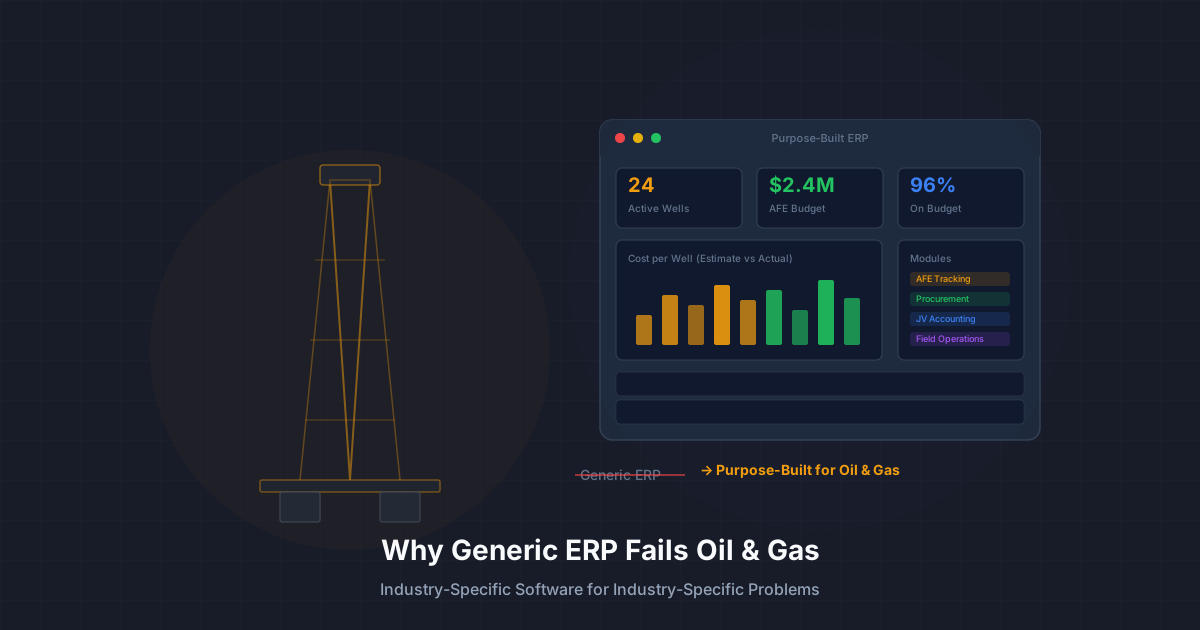
Purpose-built software uses the language of the industry. A well is a well, an AFE is an AFE, a rig move is a rig move. Users see familiar terminology, familiar workflows, and familiar reports. Adoption improves because the system feels like it was built for them — because it was.
What Purpose-Built Means in Practice
A purpose-built oil & gas platform starts with industry-specific data models. Wells, rigs, AFEs, cost categories, and joint venture structures are first-class entities in the database — not custom fields bolted onto a generic project table.
Workflows reflect actual industry processes. A drilling contractor's daily reporting workflow captures operational data — footage drilled, mud weight, bit records, safety incidents — alongside financial data in a single entry point. An operator's AFE approval workflow routes through the right signatories based on well type, cost category, and dollar threshold.
Reporting is built around the metrics that matter. Cost per foot, cost per well, AFE variance, equipment utilization, rig margin — these KPIs are available out of the box. Finance teams don't need to build custom reports to answer the questions they ask every day.
Integration with industry-specific systems — WITSML for real-time drilling data, OSHA/IADC for safety reporting, production accounting platforms — is native rather than custom-built. The platform fits into the existing technology ecosystem without requiring middleware or custom APIs.
Making the Transition
Moving from a generic ERP to a purpose-built platform is a significant decision, but it doesn't have to be disruptive. The best approach is to run the new system alongside the existing ERP during a transition period, migrating modules one at a time.
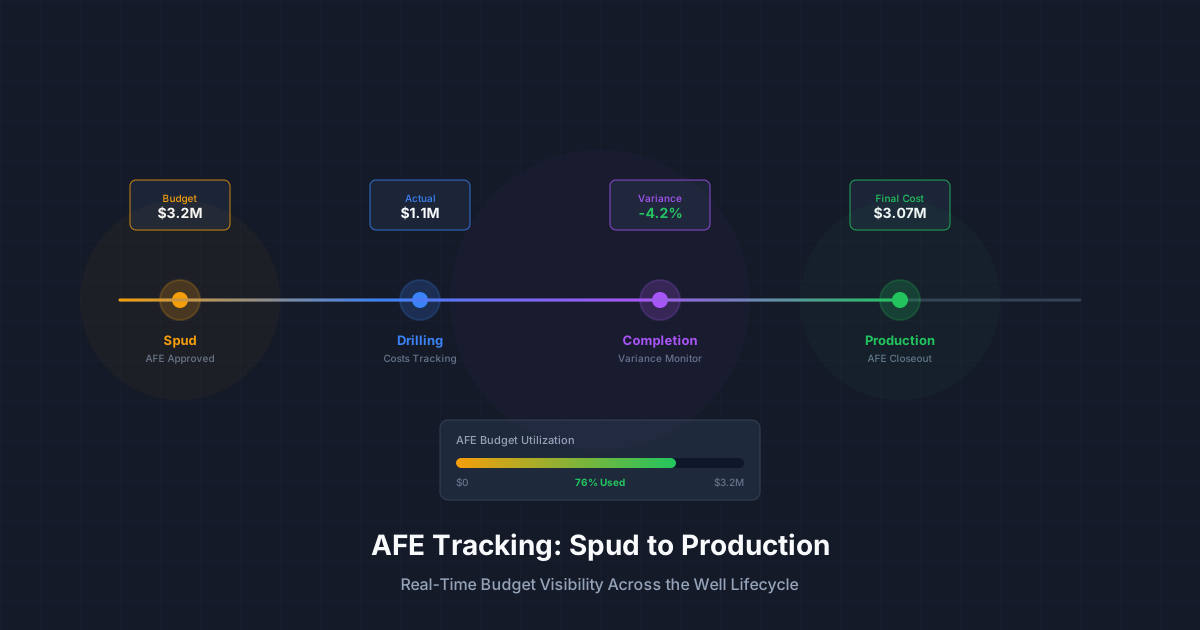
Start with the modules that cause the most pain in the generic ERP — typically procurement, field operations, or AFE tracking. Once these are running on the new platform and users see the difference, expanding to additional modules becomes easier to justify.
Data migration is the most critical step. Historical data — vendor records, PO history, well cost data, equipment records — needs to be mapped from the old system's structure to the new platform's industry-specific data model. This is where purpose-built software shines: the target data model already understands wells, rigs, and AFEs, so the mapping is straightforward.
The return on investment comes quickly. Reduced customization costs, lower maintenance overhead, faster user adoption, and better data quality all contribute to a measurable payback within the first year of operation.