Why Three-Way Matching Matters in Oil & Gas
In upstream and midstream operations, procurement volumes are massive. A single drilling program can generate hundreds of purchase orders for everything from drill bits and casing to mud chemicals and rental equipment. Each PO triggers a chain — goods arrive on location, a goods received note (GRN) is signed off, and eventually a vendor invoice lands on the accounts payable desk.
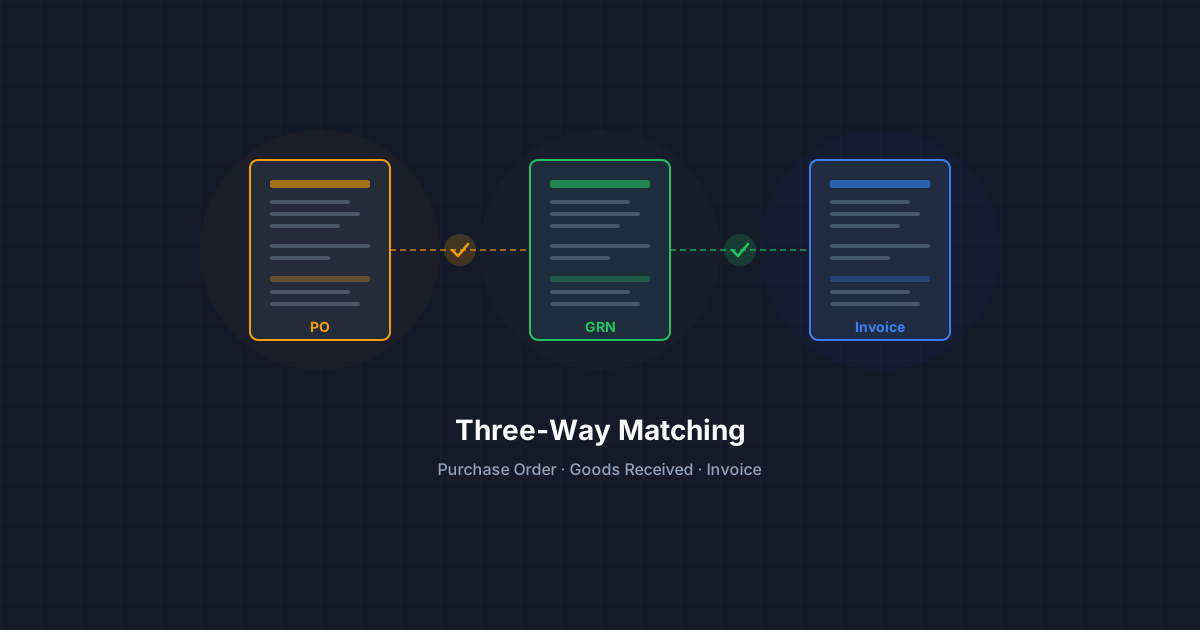
Three-way matching is the process of reconciling these three documents: the PO, the GRN, and the invoice. When all three agree on quantities, unit prices, and totals, payment proceeds. When they don't, someone has to investigate — and in oil & gas, discrepancies are the rule rather than the exception.
Without systematic matching, operators and contractors routinely overpay vendors, approve invoices for goods that never arrived on location, or miss contracted pricing that should have applied. These aren't hypothetical risks — they are daily occurrences that compound into significant financial leakage over a fiscal year.
Common Discrepancy Patterns in the Field
The most frequent discrepancy is a quantity mismatch. A PO calls for 200 joints of 9⅝" casing, but only 185 arrive on location. The GRN reflects 185, but the vendor invoices for the full 200. In a manual process, the AP clerk may not catch the difference — especially when dozens of similar invoices arrive each week.
Price variances are equally common. A frame agreement might specify a day rate of $12,500 for a mud pump, but the invoice arrives at $13,200. The vendor claims a surcharge for mobilization or standby time that wasn't on the original PO. Without a system that flags the price difference automatically, these overcharges slip through.
Unit-of-measure mismatches create subtle but costly errors. A PO might order drilling fluid in barrels, but the vendor invoices in metric tonnes. The conversion factor matters, and getting it wrong means either overpaying or underpaying — both of which create problems downstream.
Partial deliveries and back-orders add another layer of complexity. When a single PO is fulfilled across multiple shipments, each with its own GRN, matching the cumulative received quantity against the invoiced total requires careful tracking. Spreadsheet-based processes frequently lose track of partial receipts.
The Cost of Manual Matching
Many oil & gas companies still rely on email threads, spreadsheets, and PDF attachments to manage the matching process. An AP clerk receives an invoice, pulls up the PO in one system, checks the GRN in another (or in a paper file), and manually compares line by line.
This process is slow — a single invoice can take 20 to 30 minutes to verify. Multiply that across thousands of invoices per month and the labor cost alone is substantial. But the bigger cost is errors. Manual processes have an error rate that compounds over time, and each undetected discrepancy represents money walking out the door.
Late payments resulting from slow matching also carry costs. Vendors may charge late fees, or worse, delay future deliveries to locations where timing is critical. A delayed casing delivery can shut down a rig, costing tens of thousands of dollars per day in standby charges.
How Automated Three-Way Matching Works
Modern procurement platforms automate the matching process by maintaining a live link between POs, GRNs, and invoices. When a GRN is recorded — either through manual entry or integration with a warehouse management system — the platform immediately updates the PO's received quantities.
When a vendor invoice arrives, the system automatically compares each line item against the PO and GRN. Quantities, prices, and totals are checked within configurable tolerance thresholds. A 2% price variance on a low-value consumable might be auto-approved, while any variance on a high-value capital item triggers a review workflow.
Invoices that match within tolerances are flagged for auto-approval, dramatically reducing AP processing time. Invoices with discrepancies are routed to the appropriate approver with a clear summary of what doesn't match and why. The system eliminates guesswork and ensures every discrepancy gets investigated.
Tolerance Configuration for Oil & Gas
Not every discrepancy warrants a hold. Oil & gas operations deal with bulk materials where slight quantity variances are expected — you might order 500 sacks of cement and receive 498. A well-configured matching system allows you to set tolerance bands by item category, vendor, or dollar amount.
Price tolerances can be absolute (e.g., within $50) or percentage-based (e.g., within 1.5%). Quantity tolerances can account for standard shipping variances. The key is that these thresholds are defined upfront by procurement and finance teams, not left to individual judgment at the time of invoice processing.
Configurable escalation paths ensure that flagged discrepancies reach the right person. A field superintendent might resolve a quantity issue, while a procurement manager handles price disputes. The system routes each exception to the person with the authority and context to resolve it.
Building Three-Way Matching Into Your Workflow
Effective three-way matching isn't just a finance function — it requires buy-in from the field. The quality of the GRN determines the quality of the match. If field personnel sign off on deliveries without verifying quantities, the entire process breaks down.
Training storekeepers and material coordinators to record accurate GRNs is the foundation. Mobile-friendly tools that allow field staff to record receipts on a tablet or phone — right at the point of delivery — improve accuracy and speed.
Integration with your ERP or accounting system closes the loop. When a three-way match succeeds, the payment batch is generated automatically. When it fails, the exception is logged, tracked, and resolved before any payment is released. This end-to-end visibility is what separates companies that control procurement costs from those that don't.